
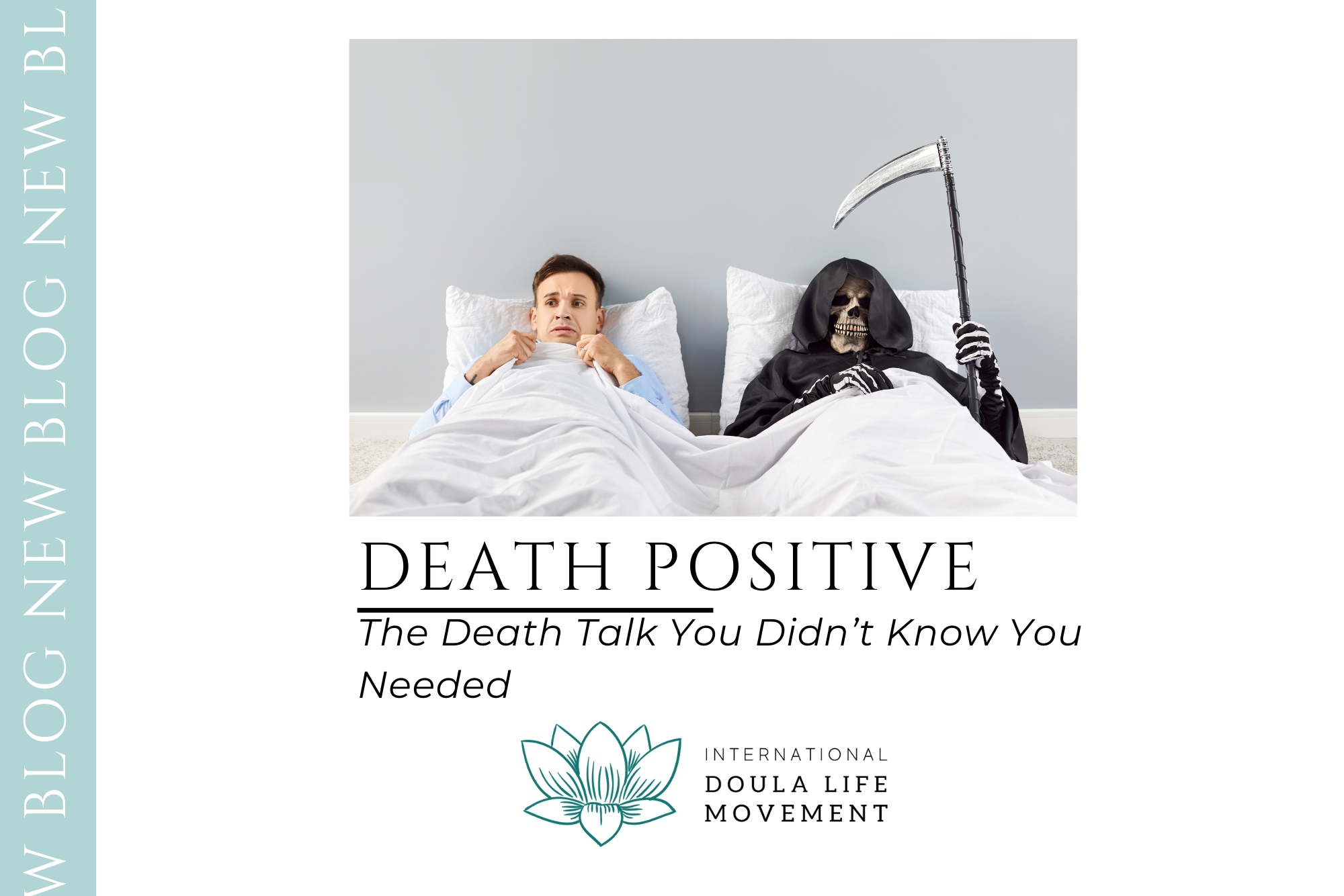
Telling people that you work as a death doula can have unpredictable results. First of all, they might not even know what a death doula is. Once that gets explained, they might be fascinated or uncomfortable. They might feel moved to tell you the story of someone in their life who died, or the wild funeral they hope to have for themselves. When the conversation is about death, nearly everyone has something to say—which makes sense, considering that death is the one thing we all have in common.
But I think part of the reason that so many people have so much to say is because most of the time they feel like they aren’t allowed to say it. Just this past week, I was chatting with someone I didn’t know well, who suddenly surprised me by saying they thought death was an inappropriate topic for conversation.
“I don’t know,” I responded (not mentioning the two monthly Death Cafes I attend, my proud membership in the Order of the Good Death, or this blog), “everybody dies, and nearly everyone has to deal with people they care about dying. Don’t you think it’s healthy to be able to talk about it?”
“In therapy, maybe,” they said. “Or in the hospital, obviously, like, when it’s happening. But not just in casual conversation. That’s morbid.”
I didn’t press the issue, but their words made me sad. Certainly, death is an uncomfortable topic and grief is a painful experience. But they are both a part of life. When people refuse to talk to each other about death it doesn’t stop it from happening, but it does make them less prepared.
If you are a part of the International Doula Life Movement community, I hope you also consider yourself a member of the Death Positive Movement, a social (and somewhat political) push to get more people talking openly and honestly about death, and to build a healthier attitude as a society toward the reality of death and dying. As doulas, the first and most important part of our job often is simply to open up the conversation, to help people feel safe communicating their thoughts, questions, and concerns about death to each other. Sometimes it means helping them figure out the answers to questions they have never even asked themselves!
Now, if you’re still not sure what I’m talking about when I say “death-positive,” check out Caitlin Doughty (Ask A Mortician) on YouTube.
And if you’re ready to take it to the next level, you might want to check out our upcoming Doula Training Course, beginning April 23. Details for how to enroll are on the main website and the weekly newsletter. See you there!