
365 A Year to Live Well
A Kettle & Candle signature program listed through the International Doula Life Movement School and hosted in the Kettle & Candle Skool community.
A yearlong guided journey in healing, reflection, mortality awareness, and meaningful preparation for living fully now. This is not a course about giving up on life. It is a course about waking up to it.
Through guided discussion, reflection, journaling, spiritual inquiry, and practical preparation, this program invites students to face impermanence honestly so they can live with greater clarity, gratitude, purpose, and peace.
Orientation starts on Monday December 28th for the 2027 year.
Overview
Most people avoid mortality until crisis forces the conversation. This course takes a different path. 365 — A Year To Live Well is a guided yearlong experience for people who want to live more consciously, tend old wounds, clarify what matters, prepare wisely, and meet the reality of death with greater wholeness rather than fear.
This work is reflective, emotional, spiritual, and practical. It asks real questions. It invites real honesty. And it creates space for the kind of growth that cannot happen through surface thinking alone.
This is the evolved next version of 365 — A Year To Live, expanded and deepened to reflect the fuller arc of the work: healing, living consciously, planning well, and preparing for the end of life with honesty and heart.
The course may be listed through the International Doula Life Movement School. All classroom access, student materials, community discussion, downloads, and participant resources are housed in the Kettle & Candle Skool community.
Tuition:
Tuition for new participants: $497
Returning alumni participant seat: $97
The new participant tuition is a yearlong investment in guided reflection, mortality awareness, meaningful preparation, and intentional living. Returning alumni may continue the work at a reduced alumni rate of $97. Payment details, registration instructions, and any available payment options will be provided during the enrollment process.
Who This Program Is For:
This program is for people who know there is more to life than simply staying busy until it ends.
It is for those who want to:
- reflect more deeply on how they are living now
- heal emotional, spiritual, or relational burdens carried too long
- explore gratitude, values, forgiveness, meaning, and presence
- face mortality with greater honesty and less avoidance
- prepare thoughtfully for future health and end-of-life decisions
- live in a way that aligns with their values before crisis arrives
This course is especially meaningful for people who are ready for serious inner work, spiritual reflection, and practical preparation. It is not shallow self-help. It is not morbid. It is not rushed. It is steady, honest work for people who want to live awake.
What Makes This Work Different:
This course does not separate emotional, spiritual, and practical preparation. Too often, programs focus on only one piece: the feelings, or the paperwork, or the philosophy. This work holds all three. Students are invited not only to reflect on mortality, but also to live more fully, prepare more wisely, and come into better relationship with themselves, their loved ones, and the life they are actually living now.
This course is shaped by decades of lived experience walking alongside individuals and families facing illness, grief, crisis, decision-making, and end-of-life realities. It was not built from theory alone. It was forged close to the fire of real life.
The Journey Through the Year:
Part One — Healing the Wounds That Shape Us
We begin with the work of soul injury and the ways grief, moral pain, fragmentation, and unhealed experience can shape a life from underneath. This portion of the course invites students toward deeper understanding, naming, reflection, and return to wholeness.
Part Two — Living More Fully
From that foundation, we move into the practices and questions that help us live more intentionally: gratitude,
values, forgiveness, presence, meaning, and reclaiming the essential self.
Part Three — Planning Well
Facing mortality also means preparing wisely. In this part of the year, we explore advance care planning, legacy, decisions, documents, communication, and the practical steps that help people and families suffer less in times of crisis.
Part Four — Dying Well and Integration
The final portion of the journey turns toward impermanence, letting go, completion, ritual, and integration. The goal is not simply to think about dying, but to live in such a way that one’s life becomes more complete, more honest, and more deeply one’s own.
How the Course Works:
This is a guided discussion-based course, not a passive information dump.
Students are invited into a yearlong process that includes:
- guided teaching and discussion
- reflective writing and journaling
- selected readings
- spiritual and emotional inquiry
- supportive PDFs and handouts
- practical planning conversations
- meaningful ritual and integration practices
Some parts of this work are deeply moving. Some are challenging. Some ask students to sit with truths they may have avoided for years. That is not failure. That is part of the work. For that reason, this course is held with seriousness, compassion, and respect for each person’s pace.
Required Materials:
A short materials list will be provided at orientation.
The first required text for the course is: “Soul Injury” by Deborah Grassman. Additional course materials may include selected readings, journals, and simple reflective supplies used throughout the year.
Students are also encouraged to have:
- a 3-ring binder for course notes, PDFs, and support materials
- one private journal for uncensored thought-dumping and emotional release
- one gratitude journal in a book that feels meaningful or comforting
- water-soluble paper for a later ritual exercise introduced during the course
Not every item is needed on day one. Students will be guided clearly through what is needed and when.
Frequently Asked Questions:
Is this a class about death?
It is a class about life lived in honest relationship with mortality. Death is part of the conversation because impermanence shapes every life, whether we acknowledge it or not.
Is this the same course as 365 — A Year To Live?
This is the evolved and expanded version of that course. It carries the spirit of the original work forward while offering a clearer and more integrated arc.
Is this a book study?
No. While the course includes required reading and selected texts, it is not simply a book discussion group. It is a guided learning, reflection, and preparation process.
What book do I need first?
The first required text is Soul Injury by Deborah Grassman. Additional materials will be shared at orientation.
What supplies will I need?
Students will receive a short materials list. This may include journals, a binder for handouts and PDFs, and a few simple items used for reflective exercises and ritual work.
Where will the course materials be located?
Course materials, classroom updates, student discussions, downloads, and participant resources will be housed in the Kettle & Candle Skool community. Students will receive access instructions after registration. The course may be listed through the International Doula Life Movement School, but the classroom experience and materials are provided through Kettle & Candle.
What is the tuition?
Tuition for new participants is $497. Returning alumni participants may continue the work at the reduced alumni rate of $97. Payment details and registration instructions will be provided during enrollment.
Do I need experience with journaling or spiritual work?
No special background is required. What is needed is a willingness to reflect honestly, engage respectfully, and do the work with sincerity.
Is this course emotionally intense?
Parts of it can be. The material is handled with care, but it is real work, not surface conversation.
Is this course only for people who are dying?
No. It is for people who want to live more consciously now, rather than postponing the important work until crisis arrives.
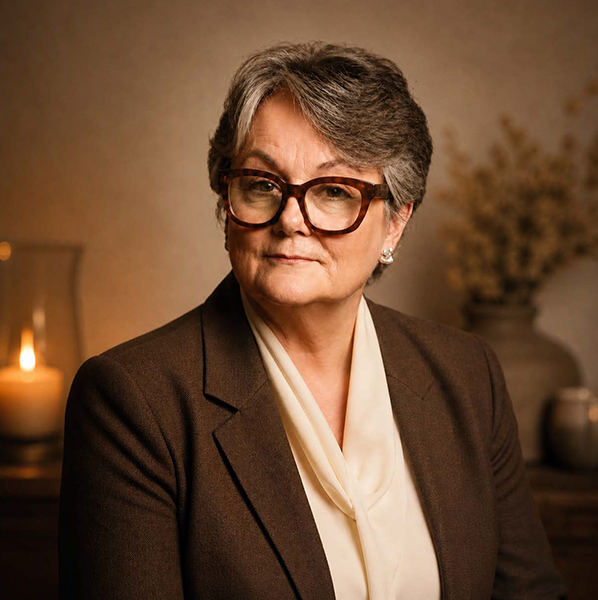
Pam Carter
Over the last 40 years, Pam has worked with countless individuals as they prepared for their good death, supported loved ones as they made their final good-byes and guided people through the process of settling the estates of those who had passed on.
Pam views her work as an end-of-life doula and educator to be a sacred calling. Before this work was the focus of her career, she found herself being the “go-to” person in her community for providing education, advice and support to those preparing to die and their loved ones who are navigating the process of settling an estate while processing their own grief.
After working with so many different individuals and families across the economic spectrum, Pam realized that end-of-life education, planning and values-based care is sorely lacking for the majority. Today, she focuses her work on helping people prepare for their final adventure – a good death – through advanced planning education and active work “in the field” as a medical advocate and an end-of-life doula.
What people are saying
Why IDLM?
Continued education
Monthly at no cost to our students. Keeping you updated on industry advances and tools to enhance your practice.
The Movement
You found your doula family. Our family community for ongoing support on a daily basis.
Instructors
Who are actively practicing their specialty/services daily.
